Table of Contents
- Introduction to Organ-on-Chip Technology
- More Accurate Drug Testing
- Liver-on-a-Chip Breakthroughs
- Heart-on-a-Chip Research
- Brain-on-a-Chip Technology
- Multi-Organ Chips
- Personalized Medicine
- AI-Powered Organ-on-Chip Systems
- Benefits and Risks of Organ-on-Chip Technology
- Comparison Table
- Future of Organ-on-Chip Technology
- Conclusion
Introduction to Organ-on-Chip Technology
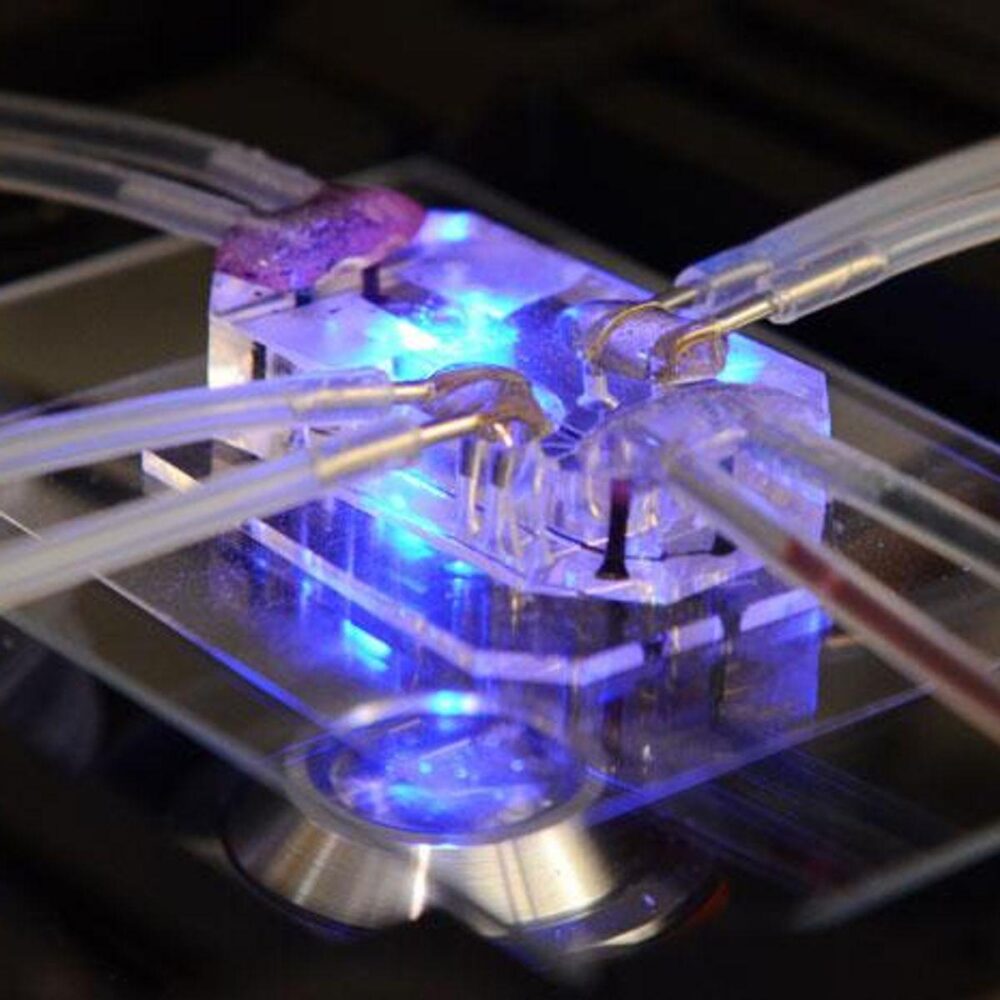
Organ-on-Chip Technology is an innovative scientific approach that uses tiny devices containing living human cells to reproduce selected functions of human organs. These devices often contain microscopic channels that control the movement of fluids, nutrients, and other substances. Some systems can recreate physical conditions such as blood flow, breathing movements, or interactions between different types of cells.
In 2026, Organ-on-Chip Technology is gaining attention because it may help researchers study diseases, evaluate experimental medicines, and understand how human tissues respond to chemicals. Researchers are also combining these systems with sensors, artificial intelligence, and advanced manufacturing techniques to improve the quality of laboratory experiments. A 2026 review describes applications in drug testing, disease modelling, personalized medicine, and space research. <Cite refs={[“turn477986search12″,”turn477986search13”]}/>
The technology offers hope for more human-relevant research and could reduce reliance on some animal experiments. However, these tiny models cannot yet reproduce every function of a complete human body. Their accuracy, consistency, and usefulness must be evaluated for each specific application.

This article explores seven powerful Organ-on-Chip Technology developments, their potential benefits, and the risks researchers must address.
1. More Accurate Drug Testing with Organ-on-Chip Technology
One of the most promising uses of Organ-on-Chip Technology is testing how experimental medicines affect human cells and tissues. Traditional laboratory testing often relies on cells grown in flat dishes, while animal studies can provide information about whole-body responses. However, neither approach perfectly predicts how every medicine will behave in humans.
Organ chips can create more realistic environments by combining living cells, microscopic fluid channels, and controlled physical conditions. For example, a chip designed to model lung tissue may recreate an air-facing surface and fluid movement, allowing scientists to investigate how substances interact with lung cells.
These models could help researchers identify promising drug candidates and potential safety problems earlier in development. They may also help scientists understand why certain treatments work differently across tissues.
Nevertheless, better biological realism does not automatically guarantee accurate predictions. Results depend on the cell sources, chip design, experimental conditions, and validation methods. Organ chips should therefore be assessed against reliable reference data and used alongside other evidence where appropriate.
Potential benefit: More human-relevant early testing could help researchers make better decisions about which medicines deserve further investigation.
2. Liver-on-a-Chip Breakthroughs
The liver plays a major role in processing medicines, breaking down chemicals, and producing substances essential to the body. Because of these functions, liver research is an important area for Organ-on-Chip Technology.
A liver-on-a-chip system uses living liver cells in a controlled microenvironment to investigate drug metabolism and possible liver toxicity. Researchers can monitor how cells respond to different compounds and examine changes in indicators of cell health and function.
These systems may help identify compounds that could damage the liver before they advance to later stages of drug development. Scientists are also exploring how liver chips could improve the study of chronic liver diseases and interactions between medicines.
The U.S. Food and Drug Administration has researched organ-chip methods, including liver-chip systems, to investigate how chemicals affect biological systems. In 2026, regulatory science work continued to examine how microphysiological systems could support drug safety assessments. <Cite refs={[“turn477986search10″,”turn477986search4”]}/>
However, a liver chip does not reproduce every function of a complete liver. It may lack some immune, hormonal, vascular, and whole-body interactions. Researchers must establish which questions a particular model can answer reliably.
Why it matters: Liver chips could become valuable tools for investigating drug metabolism and detecting certain types of toxicity earlier.
3. Heart-on-a-Chip Research
The heart depends on coordinated electrical signals, muscle contractions, and blood circulation. Heart-on-a-chip systems aim to recreate selected aspects of cardiac biology so researchers can study how medicines and other substances affect heart cells.

Some models use human heart muscle cells to investigate contraction, electrical activity, and cellular responses to experimental treatments. Scientists may use sensors to measure changes in the rhythm or strength of contractions and to detect warning signs associated with potential cardiac toxicity.
These systems could be especially useful during early drug development, when researchers need to investigate whether a compound might interfere with normal heart function. They can also support research into inherited cardiac disorders and disease mechanisms.
Combining heart chips with automated measurement tools may allow researchers to compare many compounds under consistent laboratory conditions. This could improve the speed and organization of some screening experiments.
Still, a small cardiac model is not a complete human heart. It may not fully reproduce blood pressure, nervous system control, immune responses, or the complex interactions between organs. Promising results must be interpreted carefully and supported by additional evidence.
Potential benefit: Heart-on-a-chip systems may improve early investigations into cardiac safety and help researchers understand how treatments affect heart tissue.
4. Brain-on-a-Chip Technology
The human brain contains many types of cells that communicate through complex electrical and chemical signals. Brain-on-a-chip research attempts to reproduce selected aspects of this environment using living neural cells and engineered laboratory platforms.
Scientists can use these models to investigate how neurons communicate, how brain cells respond to drugs, and how certain neurological conditions develop. Depending on the design, a chip may contain neurons, supporting glial cells, or small tissue-like structures.
Organ-on-chip approaches could help researchers study neurological disorders and examine whether experimental treatments affect particular cellular processes. They may also provide opportunities to investigate how substances cross or affect models of the blood-brain barrier, which normally regulates the movement of materials between blood and brain tissue.
More advanced systems can combine sensors with imaging and computational analysis to monitor cellular activity over time. This could provide information that is difficult to obtain from a single end-point laboratory test.
The limitations are substantial, however. Brain function depends on complex networks, long-term development, blood supply, immune interactions, and connections with other organs. Current chips cannot reproduce the full experience or functioning of a human brain.
Why it matters: Brain-on-a-chip research could support more detailed laboratory studies of neurological diseases while remaining an experimental research tool.
5. Multi-Organ Chips: Connecting Different Tissues
The human body functions through interactions between organs. A medicine absorbed through the intestine may be processed by the liver and later affect the heart, kidneys, or brain. Testing these organs separately may miss important interactions.
Multi-organ chip systems attempt to connect two or more tissue models through microfluidic channels. The circulating fluid can carry substances from one model to another, allowing scientists to investigate selected aspects of how organs interact.
For example, a connected intestine-liver system may help researchers study how a substance is absorbed and metabolized. A model involving liver and kidney tissues could help investigate how compounds are processed and how their by-products might affect other cells.
These systems could eventually support more comprehensive drug research by combining information from several tissues within one experimental platform.
However, connecting multiple chips also makes experiments more complicated. Each tissue may require different nutrients, flow rates, and environmental conditions. Scientists must also ensure that the proportions and timing of substances circulating between models are biologically meaningful.
Potential benefit: Multi-organ chips may reveal interactions that single-organ models cannot capture on their own.
6. Personalized Medicine with Organ-on-Chip Technology
People can respond differently to the same medicine because of genetic differences, existing diseases, age, and other biological factors. Personalized medicine aims to use such differences to guide healthcare decisions.
Organ-on-Chip Technology could support this goal by allowing researchers to build tissue models using cells from specific individuals. In some approaches, scientists use induced pluripotent stem cells, which can be developed into different cell types under suitable laboratory conditions.
A patient-derived model could help researchers investigate how particular cells respond to an experimental medicine or compare responses across different treatment options. In the future, such systems may contribute to research on rare diseases and individual variations in drug response.
For instance, a research team could compare tissue responses from several cell donors to investigate whether a candidate treatment has different effects across individuals.
This does not mean that an organ chip can currently determine the best treatment for every patient. Cell preparation, tissue maturity, genetic changes introduced during cell culture, and differences between laboratory conditions and the human body can all affect results. Clinical decisions require validated evidence and qualified medical professionals.
Potential benefit: Patient-derived chips may eventually help researchers develop more individualized approaches to testing and treatment selection.
7. AI-Powered Organ-on-Chip Systems
Artificial intelligence could make Organ-on-Chip Technology more useful by helping scientists interpret large amounts of experimental data. Sensors and imaging systems can produce continuous information about cell behaviour, tissue structure, fluid movement, and responses to different compounds.
AI-assisted analysis may identify patterns that are difficult to notice through manual inspection. For example, software could help detect changes in cell shape, compare responses to different drug concentrations, or flag unusual measurements that require further investigation.
Automated platforms could also improve experimental consistency by helping researchers control fluid flow, temperature, and other laboratory conditions. When many chips are tested at once, computational tools may support the organization and comparison of results.
In the future, combining organ chips with AI models could improve the analysis of drug responses and disease mechanisms. However, the quality of AI predictions depends on the quality and diversity of the data used to train and test the models.
Poor-quality measurements, biased datasets, or an AI system that has not been independently validated could lead to misleading conclusions. Scientists must also consider data security and explain how automated predictions are used.
Potential benefit: AI could make organ-chip experiments easier to monitor and analyse, helping researchers discover patterns and identify promising areas for further testing.
Benefits and Risks of Organ-on-Chip Technology
Organ-on-Chip Technology offers several important opportunities for biomedical research. It can provide controlled environments containing living human cells, support detailed studies of disease processes, and help researchers investigate drug effects before moving to more complex stages of testing.
It may also contribute to reducing animal use in certain experiments when a model is scientifically suitable and adequately validated. In March 2026, the FDA issued draft guidance describing general considerations for validating new approach methodologies used in drug development. This reflects growing regulatory attention to alternative testing methods, but it does not mean every organ-chip platform is automatically accepted for every purpose. <Cite refs={[“turn477986search0″,”turn477986search2”]}/>
The technology also has important limitations. Producing reliable chips can require specialized equipment, trained staff, and carefully controlled manufacturing processes. Different laboratories may obtain different results if their cell sources or experimental procedures vary.
Most importantly, a chip represents only selected biological functions. It cannot yet reproduce every immune, hormonal, metabolic, and neurological interaction within a complete person.
The strongest approach is to evaluate each system for a defined purpose, compare its results with independent evidence, and combine it with other appropriate testing methods.
Organ-on-Chip Technology Comparison Table
| Breakthrough | Potential benefit | Main challenge |
|---|---|---|
| Drug testing chips | More human-relevant early testing | Predicting whole-body responses |
| Liver-on-a-chip | Studying metabolism and liver toxicity | Reproducing complete liver function |
| Heart-on-a-chip | Investigating cardiac safety | Modelling complex heart physiology |
| Brain-on-a-chip | Studying neural processes | Recreating complex brain networks |
| Multi-organ chips | Examining interactions between tissues | Coordinating different tissue needs |
| Personalized chips | Exploring individual drug responses | Validating patient-specific predictions |
| AI-powered chips | Faster data analysis and monitoring | Bias, data quality, and reliability |
Organ-on-Chip Technology Progress Graph
The graph below is a conceptual illustration, not measured research data. It shows a possible pathway from early laboratory research to wider adoption. It does not indicate the actual maturity of every organ-chip application.
[Graph concept: Organ-on-Chip Technology Development Path]
Research and prototype development → Laboratory validation → Independent testing → Application-specific regulatory evaluation → Wider adoption where evidence supports it.
Each stage requires evidence that the model is reliable for its intended use. Progress may differ considerably between liver, heart, brain, and multi-organ systems.
Future of Organ-on-Chip Technology
The future of Organ-on-Chip Technology will depend on whether researchers can make these systems more reliable, reproducible, affordable, and useful for specific scientific questions.
One important direction is standardization. If laboratories can follow consistent methods for producing chips, growing cells, measuring responses, and reporting results, it may become easier to compare findings across studies.
Another direction is combining chips with automation, advanced imaging, sensors, and computational models. These tools could improve monitoring and help scientists analyse experiments more efficiently.
Regulatory evaluation will also be important. Researchers need to demonstrate that a chip performs well for its intended purpose and provides information that can support a particular decision. The acceptance of one type of organ chip for a specific application does not automatically establish the reliability of every other chip.
Personalized models and multi-organ systems may open new research opportunities, but they will require careful validation before their results can be relied upon in clinical settings.
Ultimately, Organ-on-Chip Technology is most likely to have a meaningful impact as part of a broader scientific toolkit. It may complement cell cultures, computational modelling, animal studies where appropriate, and clinical research rather than immediately replacing every existing method.
Conclusion
7 Powerful Organ-on-Chip Breakthroughs: Hope & Risks demonstrates how tiny laboratory devices could contribute to major advances in biomedical research. Drug-testing platforms, liver and heart models, brain chips, multi-organ systems, personalized medicine, and AI-assisted analysis all offer valuable opportunities.
The positive outlook is that these systems may help scientists understand human biology more directly, investigate drug safety, and reduce reliance on some animal experiments. The risks include incomplete biological models, inconsistent results, high costs, and overconfidence in experimental predictions.
In 2026, Organ-on-Chip Technology is a promising but still developing field. Its success will depend on rigorous testing, transparent reporting, and evidence that each model can reliably answer the questions researchers ask of it. With continued research and careful validation, organ chips could become an increasingly valuable part of future medicine and drug discovery.