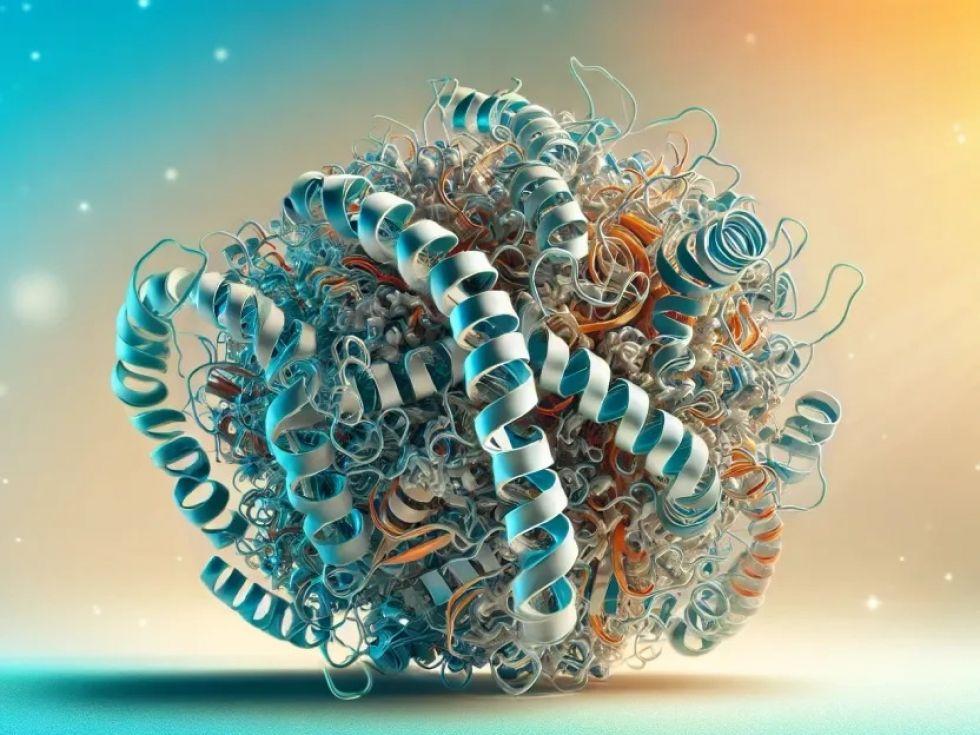
Introduction to AI-Designed Protein Breakthroughs
AI-Designed Protein Breakthroughs are changing how scientists discover, create, and improve the tiny molecular machines that make life possible. Proteins help our bodies digest food, fight infections, repair tissues, and carry out thousands of essential biological processes. Traditionally, designing a new protein required extensive laboratory experiments, scientific knowledge, and years of testing. Today, artificial intelligence (AI) can help researchers design protein structures and sequences for specific purposes, potentially making biological research faster and more precise.
In 2026, AI-designed proteins are an important area of scientific research because they could contribute to new medicines, more efficient industrial enzymes, advanced diagnostic tools, and environmentally friendly technologies. Researchers are exploring ways to create proteins with functions that may be difficult to discover through traditional methods. However, a computer-generated design is not automatically safe or effective. Scientists must still test whether a protein folds correctly, performs its intended task, and behaves safely in real biological systems.
This article explores seven powerful AI-designed protein breakthroughs, their potential benefits, and the hidden risks that researchers must address before these technologies become widely useful.
Table of Contents
- AI-Designed Protein Breakthroughs in New Protein Creation
- AI-Designed Protein Breakthroughs in Medicine
- AI-Designed Protein Breakthroughs in Enzyme Engineering
- AI-Designed Protein Breakthroughs in Disease Detection
- AI-Designed Protein Breakthroughs in Sustainable Technology
- AI-Designed Protein Breakthroughs in Scientific Research
- AI-Designed Protein Breakthroughs and Biosafety Risks
- Benefits and Challenges Comparison
- The Future of AI-Designed Protein Breakthroughs
- Conclusion
1. AI-Designed Protein Breakthroughs in New Protein Creation
One of the most exciting developments is the ability to design proteins that do not simply copy existing natural proteins. Scientists can use AI models to propose new amino acid sequences and three-dimensional structures intended to perform particular functions. This process is often called de novo protein design.

Proteins consist of chains of amino acids that fold into complex shapes. Their shapes and chemical properties help determine what they can do. Designing a useful protein is challenging because even a small change in its sequence can affect its stability, shape, or activity.
AI systems can explore possible sequences and structures much faster than researchers could test them individually. Some systems generate candidate structures, while others predict which amino acid sequences may fold into a desired shape. Tools such as RFdiffusion and ProteinMPNN have helped expand the possibilities for computational protein design.
Why AI-Designed Protein Breakthroughs Matter
AI-assisted design gives scientists more ways to investigate biological problems. Instead of relying entirely on naturally occurring proteins, researchers can explore new designs that may bind to a particular target, assemble into useful structures, or perform specialized molecular tasks.
Nevertheless, predictions need experimental confirmation. A protein that looks promising in a computer model may fail to fold properly or may not perform its intended function in a laboratory. Successful design therefore depends on combining AI predictions with careful experiments.
2. AI-Designed Protein Breakthroughs in Medicine
Medicine is one of the most promising areas for AI-designed proteins. Many treatments depend on proteins, including antibodies, hormones, and other biological molecules. AI may help researchers develop new protein-based candidates that recognize specific biological targets.
For example, scientists can investigate proteins designed to bind to a particular molecule associated with a disease. If the design works as intended, it could support the development of treatments that interact more selectively with the target.
Potential Benefits for Future Treatments
AI-designed proteins could eventually help researchers investigate new approaches to cancer, infectious diseases, inflammatory conditions, and other medical challenges. They may also support the development of therapeutic proteins with improved stability or more specific binding properties.
However, these possibilities should not be confused with proven medical treatments. A promising protein candidate must undergo laboratory testing, safety evaluation, and appropriate clinical trials before it can be considered for routine medical use.

The Hidden Risks of Medical Protein Design
A newly designed protein might trigger an unwanted immune response, interact with the wrong biological target, or break down before reaching the intended location. Researchers must also consider manufacturing consistency, dosage, long-term effects, and the possibility of unexpected biological interactions.
AI can help prioritize candidates, but it cannot eliminate the need for medical evidence and careful regulation.
3. AI-Designed Protein Breakthroughs in Enzyme Engineering
Enzymes are proteins that accelerate chemical reactions. They are important in food production, manufacturing, agriculture, waste processing, and many other industries. AI-designed protein breakthroughs may help scientists create enzymes that perform specific tasks more efficiently.
Natural enzymes have evolved to function under particular conditions. Industrial processes, however, may involve high temperatures, unusual acidity, or chemicals that make natural enzymes less effective. Protein design tools can help researchers explore modifications that may improve stability or activity under these conditions.
How AI Could Improve Industrial Enzymes
Scientists may use AI to identify promising amino acid changes, predict how those changes affect protein structure, and generate candidates for testing. An improved enzyme might reduce the energy required for a manufacturing process or help convert a raw material into a valuable product.
Potential applications include textile processing, food manufacturing, bio-based chemicals, and selected recycling processes. In some cases, enzymes could provide an alternative to harsher chemical treatments.
The main challenge is ensuring that an enzyme works reliably outside controlled laboratory conditions. A design that performs well in a small experiment may behave differently at industrial scale. Researchers must assess production costs, durability, reaction efficiency, and environmental effects before widespread adoption.
4. AI-Designed Protein Breakthroughs in Disease Detection
Early disease detection can improve the chances of successful treatment. Researchers are investigating how designed proteins might help detect biological markers associated with infections, cancers, and other conditions.
A protein can be engineered to recognize a particular molecule. If that recognition produces a measurable signal, the protein may become part of a diagnostic test or biosensor. AI can help researchers search for candidate proteins with the required binding properties.
Potential for Faster and More Specific Tests
In the future, designed proteins could contribute to diagnostic devices that identify selected biomarkers in blood, saliva, or other samples. They may also help researchers develop tools for monitoring changes in biological systems.
These applications could be valuable where rapid testing is important, although performance will depend on the specific design and testing method.
Challenges in Diagnostic Accuracy
A diagnostic protein must distinguish its intended target from similar molecules. Poor specificity can cause false-positive results, while weak binding may cause genuine cases to be missed. Real samples can also contain substances that interfere with detection.
Therefore, AI-designed diagnostic components need extensive validation across different samples and populations. Researchers must demonstrate that the resulting test is accurate, reproducible, and practical to use.
5. AI-Designed Protein Breakthroughs in Sustainable Technology
Environmental challenges have encouraged scientists to explore biological methods for reducing waste, producing useful materials, and improving chemical processes. AI-designed proteins may contribute to these efforts by helping researchers develop enzymes or other proteins with targeted functions.
For example, researchers can investigate enzymes that break down selected materials or help convert biological waste into useful products. Designed proteins may also support the development of cleaner manufacturing methods or more efficient processes for producing certain chemicals.
Hope for Greener Industrial Processes
If an engineered enzyme works effectively at relatively low temperatures and pressures, it could reduce energy use in a suitable process. Biological methods may also help reduce dependence on some harsh chemicals.
However, the environmental benefits depend on the entire production system. Scientists need to consider how the protein is manufactured, how much energy is consumed, what other materials are required, and whether the process produces harmful by-products.
Environmental Risks to Consider
Proteins designed for industrial use must be assessed for their behavior outside controlled settings. Researchers should evaluate whether the protein breaks down as expected, affects non-target organisms, or creates unexpected environmental consequences.
Responsible development requires containment where appropriate, risk assessment, and monitoring that matches the intended application.
6. AI-Designed Protein Breakthroughs in Scientific Research
AI-designed proteins can also help scientists study how biological systems work. Researchers may create proteins that interact with selected molecules, assemble into specific structures, or provide new tools for examining cellular processes.
These designs can help investigate questions that are difficult to answer using naturally occurring proteins alone. In laboratory research, a custom-designed protein may act as a molecular probe, a structural component, or a tool for studying interactions between biological molecules.
Combining AI With Laboratory Experiments
Modern protein research increasingly combines computational predictions with experimental measurements. AI proposes candidate designs, laboratory experiments test them, and the results can guide later rounds of improvement.
This cycle is important because protein behavior is complex. Models learn from available data, but they may struggle with unfamiliar structures, unusual chemical environments, or biological conditions that were poorly represented during training.
A research paper published in Nature Communications in 2025, with its version of record appearing in January 2026, examined joint optimization of protein sequences and structures and evaluated the approach using large-scale protein stability measurements. This illustrates how experimental evidence remains essential when improving AI-generated designs.
The future of this field will depend not only on generating more candidates, but also on identifying which candidates genuinely work.
7. AI-Designed Protein Breakthroughs and Biosafety Risks
The growing ability to design biological molecules brings important responsibilities. AI-designed proteins may offer major benefits, but their effects cannot always be predicted perfectly from a computer model.
A design could behave differently in living cells than it does in a simulation. It might interact with unintended molecules, disrupt a biological pathway, or produce an immune response. Such outcomes are not inevitable, but they must be considered before a protein is used in medicine, agriculture, industry, or the environment.
Why Responsible Testing Is Essential
Scientists need a clear testing process that includes computational evaluation, laboratory validation, risk assessment, and independent review where appropriate. The level of testing should reflect the protein’s intended use and the consequences of failure.
Researchers and developers should also protect sensitive biological data and establish safeguards against the misuse of protein-design tools. Safety reviews should evolve as AI capabilities change.
The Importance of Transparency
Clear documentation can help other researchers understand how a protein was designed, what evidence supports its function, and which uncertainties remain. Independent validation and responsible sharing of results can strengthen confidence in legitimate research.
The goal is not to slow every innovation. It is to make sure that scientific progress is supported by reliable evidence and appropriate safeguards.
Benefits and Challenges of AI-Designed Protein Breakthroughs
The following table summarizes potential applications and the main challenges researchers must address.
| Research Area | Potential Benefit | Main Challenge |
|---|---|---|
| New protein creation | Explore structures not found in nature | Reliable folding and stability |
| Medicine | Discover new therapeutic candidates | Safety and clinical validation |
| Enzyme engineering | Improve selected chemical processes | Performance at industrial scale |
| Disease detection | Develop targeted diagnostic components | Accuracy and false results |
| Sustainability | Support selected waste-processing methods | Environmental assessment |
| Scientific research | Create new molecular tools | Reproducibility of results |
| Biosafety | Improve risk-aware development | Unintended biological effects |
Graph: Potential Applications of AI-Designed Protein Breakthroughs
The graph below is an illustrative editorial rating of the potential of different application areas. It is not a measured scientific result, a market forecast, or a ranking of proven success.
| Application Area | Illustrative Potential Score |
|---|---|
| Medicine | 9/10 |
| Enzyme Engineering | 8/10 |
| Scientific Research | 9/10 |
| Disease Detection | 8/10 |
| Sustainable Technology | 7/10 |
| Biosafety Tools | 8/10 |
Text-based graph
Medicine: █████████ 9/10
Scientific Research: █████████ 9/10
Enzyme Engineering: ████████ 8/10
Disease Detection: ████████ 8/10
Biosafety Tools: ████████ 8/10
Sustainable Technology: ███████ 7/10
These scores represent an illustrative comparison of potential, not actual performance. Real-world outcomes will depend on experimental evidence, costs, safety, and the requirements of each application.
The Future of AI-Designed Protein Breakthroughs
The future of AI-designed protein breakthroughs will likely involve stronger collaboration between artificial intelligence, structural biology, chemistry, and automated laboratories. As researchers improve their models, they may be able to generate more useful candidates and predict certain properties more accurately.
One important direction is the development of proteins with multiple coordinated functions. Another is designing proteins that change their shape in response to a specific signal. Such systems could eventually support advanced sensors, research tools, or specialized therapeutic applications, although substantial challenges remain.
Researchers are also working to connect computational design with automated experiments. In this approach, AI proposes candidates, laboratory systems test them, and the results guide subsequent designs. This feedback loop could make research more efficient while producing better evidence about which designs work.
Nevertheless, the future should not be judged by the number of proteins an AI can generate. More meaningful measures include how many designs work reliably, how safely they behave, how affordable they are to produce, and whether they solve a genuine problem.
Conclusion
AI-designed protein breakthroughs are opening new possibilities for biotechnology, medicine, environmental research, and scientific discovery. AI tools can help researchers explore protein sequences and structures that would be difficult to investigate through traditional trial-and-error methods alone.
The seven areas discussed in this article show why the technology is attracting attention. New protein structures, potential therapeutic candidates, improved enzymes, diagnostic tools, sustainable processes, and research applications could all become important contributions.
However, promising predictions are only the beginning. A computer-generated protein must be tested to establish its stability, function, safety, and usefulness in real-world conditions. Researchers must also consider biosafety, transparency, affordability, and responsible oversight.
Ultimately, the greatest promise of AI-designed protein breakthroughs lies in combining powerful computational tools with careful scientific experimentation. With responsible development, this technology could help solve important problems while keeping safety and reliable evidence at the center of innovation.