Table of Contents
- Introduction to Synthetic Cell Breakthroughs
- What Are Synthetic Cells?
- 7 Powerful Synthetic Cell Breakthroughs
- Benefits and Risks of Synthetic Cell Technology
- Synthetic Cell Research Comparison Table
- Synthetic Cell Breakthroughs: Research Progress Graph
- The Future of Synthetic Cell Breakthroughs
- Conclusion
Introduction to Synthetic Cell Breakthroughs
Synthetic cell breakthroughs are opening exciting possibilities in biotechnology, medicine, environmental protection, and scientific research. Scientists are learning how to build cell-like systems from biological components, including DNA, proteins, lipids, and other molecules. These systems can imitate selected functions of living cells and help researchers understand how life works.
Unlike ordinary cells, synthetic cells can be designed with specific purposes. For example, researchers may develop cell-like systems that produce useful proteins, deliver medicines, detect chemicals, or perform controlled biochemical reactions. These technologies offer hope for solving important problems, but they also raise questions about safety, cost, and responsible scientific development.
Although scientists have made impressive progress, creating a completely artificial cell that reproduces all the functions of natural life remains a major challenge. Understanding the latest synthetic cell breakthroughs helps explain both the opportunities and the limitations of this developing field.
What Are Synthetic Cells?
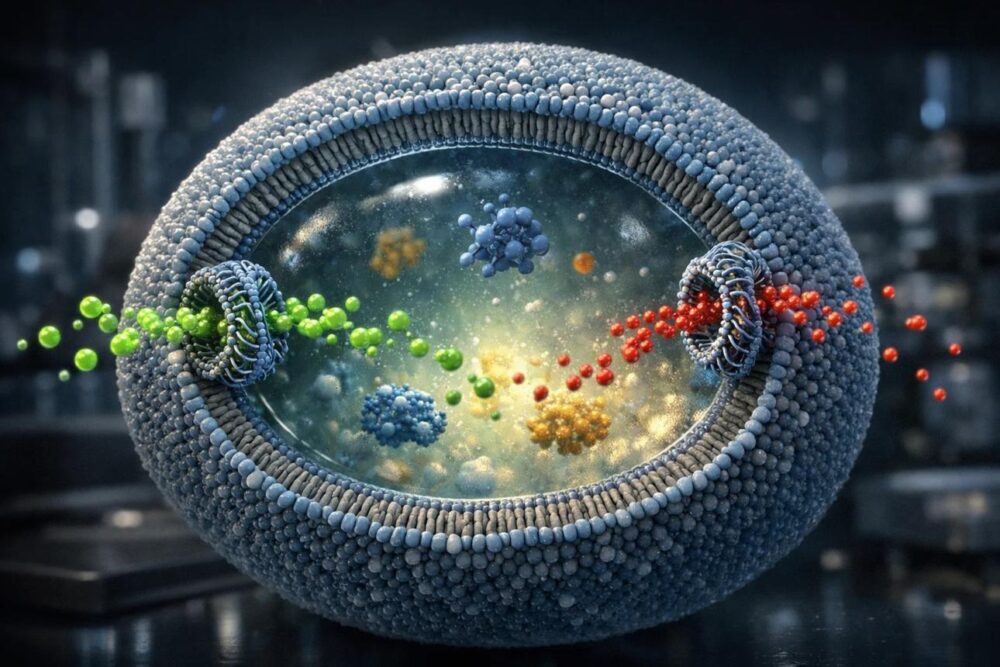
Synthetic cells are laboratory-created systems designed to imitate some of the structures or activities of natural cells. Researchers often use lipid membranes to create cell-like compartments, then introduce biological machinery that performs selected functions.
Some synthetic cells contain genetic instructions, while others use simplified chemical systems to produce proteins or respond to environmental signals. Their designs vary depending on the scientific goal.
It is important to distinguish synthetic cells from genetically modified living cells. A genetically modified cell begins with an existing living organism whose DNA has been changed. A synthetic cell system, by contrast, may be assembled from separate biological components outside a living cell. These approaches are related, but they are not the same.

7 Powerful Synthetic Cell Breakthroughs
1. Synthetic Cell Breakthroughs in Building Cell-Like Structures
One important area of progress is the creation of tiny compartments that resemble the basic structure of natural cells. Researchers use materials such as lipids to form membranes around selected molecules, creating controlled spaces for chemical reactions.
These compartments allow scientists to investigate how cells organize their internal processes. Researchers can study how molecules enter and leave a membrane, how chemical reactions occur in confined spaces, and how different components interact.
This work may eventually support artificial systems that carry out useful tasks in medicine, biotechnology, and manufacturing. However, a membrane alone does not make a complete living cell. Researchers must still coordinate many complicated processes to reproduce the behavior of natural life.
2. Synthetic Cell Breakthroughs in Artificial Protein Production
Proteins perform essential jobs in living organisms, from speeding up chemical reactions to building cellular structures. Scientists are developing cell-free systems that use DNA instructions, RNA, ribosomes, and other molecular components to produce proteins without relying on intact living cells.
These systems can help researchers test biological ideas quickly and produce selected proteins under controlled conditions. In the future, improvements could support more flexible manufacturing of research materials, industrial enzymes, and certain medical products.
One major advantage is that researchers can adjust the system to study particular reactions without managing an entire living organism. Nevertheless, protein production can be expensive, and keeping the molecular machinery active and stable remains challenging.
3. Synthetic Cell Breakthroughs for Smarter Drug Delivery
Drug delivery is another promising application of cell-like technology. Researchers are exploring artificial vesicles and other engineered compartments that can carry biological molecules or therapeutic substances.
A carefully designed carrier could potentially protect a medicine, improve its delivery to a particular location, or release its contents in response to a selected condition. Such approaches may eventually help researchers design more precise treatments.
However, many experimental systems remain at an early stage. Artificial carriers must be tested for stability, immune reactions, unwanted interactions, and the possibility of releasing their contents in the wrong place. Promising laboratory results do not automatically translate into safe and effective treatments for people.
4. Synthetic Cell Breakthroughs in Understanding the Origins of Life
One of the biggest scientific questions is how simple chemical systems developed into the first living cells. Synthetic cell research gives scientists a way to investigate individual steps involved in this transition.
Researchers can combine membranes, genetic molecules, and chemical reactions to examine how cell-like compartments might grow, maintain internal conditions, or copy biological information. Each experiment can test a specific idea about the origins of life.

These investigations do not yet provide a complete explanation of how life began. Natural evolution involved many interacting chemical and environmental processes over long periods. Even so, synthetic cell experiments help transform some difficult questions into testable scientific problems.
5. Synthetic Cell Breakthroughs for Environmental Protection
Environmental applications are attracting interest because biological systems can perform chemical transformations that are difficult to achieve through conventional methods. Researchers are investigating engineered biological components and cell-free reactions that can detect pollutants or help break down selected substances.
In principle, specially designed systems could provide tools for environmental monitoring, chemical detection, and more sustainable industrial processes. Cell-free technology may also offer advantages when researchers want to avoid releasing living engineered organisms into the environment.
However, a synthetic system does not automatically remove pollution safely. Scientists must establish which substances it can process, whether harmful by-products form, how much energy it requires, and how it behaves under real-world conditions. Environmental benefits must be demonstrated through careful testing.
6. Synthetic Cell Breakthroughs in Personalized Medicine Research
Personalized medicine aims to make healthcare more responsive to the needs of individual patients. Synthetic cell platforms and cell-free biological systems could support this goal by helping researchers study how particular biological signals interact with different treatments.
For example, scientists can investigate how a biological system responds to a selected molecule or test the behavior of candidate medicines under controlled laboratory conditions. In the future, some platforms might support faster experiments and more specialized diagnostic research.
These possibilities should not be confused with established clinical benefits. Synthetic cell systems are not universal diagnostic tools, and they cannot replace medical evaluation. More research is required to establish their reliability, reproducibility, and usefulness in specific healthcare settings.
7. Synthetic Cell Breakthroughs in Programmable Biological Systems
A long-term goal is to create synthetic biological systems that respond to instructions and perform selected tasks. Researchers are exploring ways to combine genetic circuits, molecular sensors, chemical reactions, and cell-like compartments.
A programmable system might detect a particular signal and respond by producing a molecule or activating a biochemical reaction. This could help scientists investigate biological communication and develop new biotechnology tools.
The major challenge is complexity. Natural cells coordinate thousands of interacting processes and constantly adjust to changing conditions. Reproducing even a small part of this behavior reliably requires careful design and testing. Programmable synthetic cells remain an active research area rather than a mature, general-purpose technology.
Benefits and Risks of Synthetic Cell Breakthroughs
Synthetic cell breakthroughs offer potential benefits, but responsible development requires a realistic understanding of the risks.
Major Benefits of Synthetic Cell Breakthroughs
Synthetic cell technology can give researchers greater control over biological experiments. Simplified systems may make it easier to study specific reactions, test hypotheses, and understand processes that are difficult to isolate inside living organisms.
These platforms could also support new methods for producing proteins, exploring drug delivery, monitoring chemicals, and designing more efficient manufacturing processes. By creating controlled experimental environments, scientists may discover biological mechanisms that lead to further innovations.
Another benefit is flexibility. Researchers can select particular components and modify experimental conditions to investigate different questions. This makes synthetic cell research useful across several scientific disciplines.
Hidden Risks of Synthetic Cell Breakthroughs
Despite its promise, synthetic cell research faces technical, environmental, and ethical challenges. Poorly characterized systems may behave unpredictably, while biological materials can degrade or interact with surrounding substances in unexpected ways.
Some future applications may also raise biosafety concerns, especially if engineered biological components can persist, spread, or interact with living organisms. These concerns do not mean that all synthetic cell systems are dangerous; risks depend on the specific design and intended use.
Researchers should assess hazards, use appropriate containment where needed, and evaluate potential environmental effects before moving toward practical applications. Transparent oversight and careful testing can help ensure that scientific progress produces genuine benefits.
Synthetic Cell Research Comparison Table
The following table summarizes major research directions and their potential applications. These are broad research areas, not a ranking of proven commercial breakthroughs.
| Research area | Potential application | Main challenge |
|---|---|---|
| Cell-like compartments | Controlled chemical reactions | Membrane stability |
| Cell-free protein production | Protein manufacturing | Cost and efficiency |
| Artificial drug carriers | Targeted medicine delivery | Safety and reliable release |
| Origins-of-life research | Understanding early biological processes | Reproducing complex functions |
| Environmental systems | Pollution detection and treatment research | Real-world effectiveness |
| Personalized medicine research | Testing biological responses | Validation and reliability |
| Programmable systems | Responsive biotechnology tools | System complexity |
Synthetic Cell Breakthroughs: Research Progress Graph
The following conceptual graph illustrates how different research areas can be compared by their general experimental maturity. It is an illustrative overview, not a measured dataset, published scientific ranking, or quantitative assessment of current research.
Illustrative research maturity scale
| Research area | Relative maturity |
|---|---|
| Cell-free protein production | █████ High |
| Cell-like compartments | ████ Developing |
| Artificial drug carriers | ███ Developing |
| Origins-of-life models | ███ Developing |
| Environmental applications | ██ Emerging |
| Personalized medicine platforms | ██ Emerging |
| Fully programmable synthetic cells | █ Early |
This graph highlights an important distinction: some individual techniques, such as cell-free protein production, are already useful in research and selected manufacturing settings, while fully integrated synthetic cells remain much more difficult to achieve. Progress also varies significantly between individual technologies within each category.
The Future of Synthetic Cell Breakthroughs
The future of synthetic cell breakthroughs will depend on how well researchers combine biological components into systems that work reliably. Better membrane design, improved molecular machinery, and more sophisticated computational tools may help scientists create increasingly capable artificial compartments.
In medicine, researchers may investigate improved drug carriers and new laboratory testing platforms. In industry, cell-free systems could help produce selected proteins and chemicals. Environmental researchers may explore controlled biological reactions for sensing or processing specific substances.
Nevertheless, progress is unlikely to happen all at once. Each application will require its own evidence of effectiveness, affordability, and safety. Researchers will also need to consider ethical questions and establish appropriate oversight as the technology develops.
The most realistic expectation is gradual progress, with specialized systems becoming useful before scientists can reproduce the full complexity of a natural cell.
Conclusion: Synthetic Cell Breakthroughs Offer Hope and Risks
Synthetic cell breakthroughs are expanding our understanding of biology and creating new possibilities for biotechnology, medicine, environmental research, and scientific discovery. Cell-like compartments, cell-free protein production, artificial drug carriers, and programmable biological systems each offer valuable research opportunities.
At the same time, major challenges remain. Researchers must improve system reliability, understand potential risks, reduce costs, and demonstrate that proposed applications work outside controlled laboratory conditions.
The future of synthetic cells is promising, but success will depend on scientific evidence rather than expectations alone. With responsible research and careful testing, synthetic cell technology could become an important tool for solving complex problems while helping society manage its risks.