Table of Contents
- What Is Living Bioelectricity?
- 7 Powerful Living Bioelectricity Breakthroughs
- Benefits of Living Bioelectricity
- Hidden Risks and Challenges
- Living Bioelectricity Comparison Table
- Living Bioelectricity Research Progress Graph
- The Future of Living Bioelectricity
- Conclusion
What Is Living Bioelectricity?
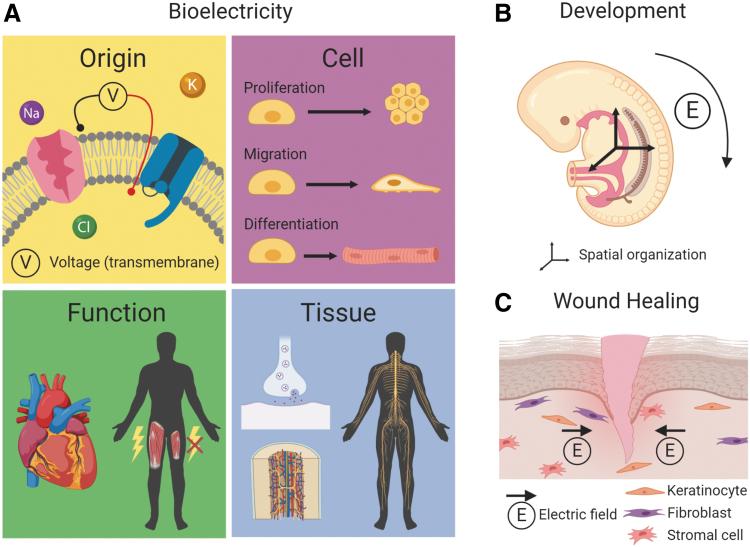
Living Bioelectricity refers to the electrical activity naturally produced by living cells and tissues. Cells maintain differences in electrical charge across their membranes through ion channels, pumps, and the movement of charged particles. These electrical signals help regulate important biological processes, including nerve communication, muscle contraction, wound healing, and tissue development.
Scientists are increasingly studying how bioelectric signals influence cell behavior beyond the brain and nervous system. Research suggests that electrical patterns can help coordinate how cells grow, move, communicate, and organize into tissues. These discoveries are creating new opportunities in regenerative medicine, bioengineering, and medical technology. <Cite refs={[“turn975402search4″,”turn975402search7”]}/>
However, Living Bioelectricity is not a magical healing mechanism. Although researchers have discovered important biological roles for electrical signals, many potential treatments remain experimental. Understanding both the promise and limitations of this field is essential for evaluating its future.

7 Powerful Living Bioelectricity Breakthroughs
1. Living Bioelectricity and Tissue Regeneration
One promising area of Living Bioelectricity research is tissue regeneration. When cells maintain different electrical potentials across their membranes, these differences can influence cellular activity and interactions. Scientists are investigating how such signals contribute to tissue growth, repair, and organization.
Research in developmental biology suggests that bioelectric signals work alongside chemical signals and genetic networks to help guide the formation of biological structures. Understanding these interactions could eventually help researchers develop better methods for repairing damaged tissues.
For example, scientists are investigating how electrical conditions affect cell migration and the coordination of cells during healing. These findings may contribute to future regenerative medicine techniques.
The positive possibility is improved control over tissue repair. However, complex tissues cannot be regenerated simply by applying electricity. Researchers must understand the relevant cell types, electrical conditions, and biological responses before developing safe treatments.
2. Living Bioelectricity for Faster Wound Healing
Living Bioelectricity may also contribute to our understanding of wound healing. When skin is damaged, changes in the local electrical environment can help influence the movement and behavior of nearby cells.
Researchers study these naturally occurring electrical cues to understand how cells migrate toward damaged areas and participate in tissue repair. This knowledge has encouraged the development of experimental approaches involving controlled electrical stimulation and bioelectronic materials.
In the future, carefully designed devices may help support certain wound-care applications by interacting with the electrical environment around injured tissue. Electrical stimulation is already used in some medical contexts, but the effectiveness depends on the condition and treatment method.
An important challenge is determining the appropriate stimulation conditions for different types of wounds. Excessive or poorly controlled stimulation may not provide the intended benefit. More research is needed to establish which approaches work best for particular patients and injuries.
3. Living Bioelectricity in Brain and Nerve Research
Electrical signaling is essential to the nervous system. Neurons communicate through changes in their membrane voltage, allowing the brain to process information and coordinate body functions.
Living Bioelectricity research investigates these electrical properties to improve our understanding of nerve activity, neurological disorders, and the interaction between biological tissues and electronic devices.
Bioelectronic technologies may help researchers record neural signals and explore ways to communicate with damaged or impaired nervous systems. Some established devices already use electrical stimulation for specific medical purposes, while many newer applications remain under investigation.

These developments could support improved neurological research and selected treatments. Nevertheless, the brain is extremely complex, and recording or stimulating electrical activity does not automatically restore every lost function. Device safety, signal accuracy, long-term performance, and patient-specific responses remain important concerns.
4. Living Bioelectricity and Smart Biomaterials
Smart biomaterials are designed to interact with biological tissues in controlled ways. Some materials can conduct electricity, generate electrical signals in response to mechanical forces, or change their behavior when exposed to particular conditions.
Researchers are investigating how these properties can be used in tissue engineering and regenerative medicine. For example, electroactive materials may help create environments that better match the electrical and physical properties of certain tissues.
Potential applications include research into nerve repair, muscle regeneration, bone healing, and the development of tissue-supporting structures. Such materials could provide useful tools for connecting biology and engineering.
However, a material that works well in a laboratory does not necessarily perform safely inside the human body. Researchers must evaluate its compatibility with living tissue, durability, degradation products, and long-term effects before clinical use.
5. Living Bioelectricity in Stem Cell Research
Stem cells can develop into different cell types under suitable conditions. Scientists are studying whether electrical signals help influence these decisions alongside chemical signals, genetic activity, and environmental conditions.
Changes in membrane voltage and the movement of ions may affect how cells grow, differentiate, and respond to their surroundings. Understanding these processes could help researchers improve laboratory methods for studying tissue development and regenerative medicine.
A deeper understanding of bioelectric regulation may eventually contribute to more controlled approaches to tissue engineering. It could also help scientists identify why cells behave differently under certain experimental conditions.
However, stem cell behavior depends on many interacting factors. Electrical signals alone cannot determine every aspect of cell identity or development. Researchers must validate findings across different cell types and experimental settings before translating them into treatments.
6. Living Bioelectricity and Cancer Research
Cancer involves complex changes in cellular growth, communication, metabolism, and gene regulation. Scientists are investigating whether altered electrical properties of cells contribute to these processes and whether bioelectric measurements could provide useful information about disease.
Some research suggests that membrane voltage and ion-channel activity are associated with cell behavior in certain cancer models. Understanding these relationships may help researchers investigate tumor biology and identify possible new research targets.
In the future, bioelectric measurements could potentially complement other methods of studying cellular activity. However, this is an active research area, and electrical properties alone cannot reliably diagnose cancer or determine the correct treatment.
Cancer is a diverse group of diseases, and results from one experimental model may not apply to every tumor. Further studies are necessary to determine which bioelectric mechanisms are clinically useful and how they interact with established cancer pathways.
7. Living Bioelectricity and Advanced Bioelectronic Devices
Bioelectronic devices connect electronic systems with living tissues to measure or influence biological activity. These technologies may include sensors, flexible electrodes, and materials that interact with local electrical signals.
Scientists are exploring ways to make such devices more adaptable, comfortable, and compatible with biological tissues. Improvements could support more precise monitoring of electrical activity and more controlled stimulation in selected medical applications.
Research published in 2025 highlighted the importance of bioelectric signaling and material properties in designing next-generation technologies for tissue regeneration. <Cite refs={[“turn975402search3″,”turn975402search14”]}/>
These approaches could strengthen the connection between biology, electronics, and medical engineering. Nevertheless, practical devices must meet strict requirements for reliability, safety, and long-term tissue compatibility. Their benefits must be demonstrated for each intended application.
Benefits of Living Bioelectricity
Living Bioelectricity offers researchers another way to understand how living cells communicate and coordinate their activities. Studying electrical signals alongside genetics and chemistry may reveal biological mechanisms that would otherwise be difficult to identify.
One important potential benefit is improved regenerative medicine research. By understanding how electrical conditions affect cell migration and tissue organization, scientists may develop better methods for investigating wound repair and tissue engineering.
Another advantage is the development of bioelectronic technologies. Devices that measure or interact with biological signals may support specific applications in neurological research, medical monitoring, and rehabilitation.
Living Bioelectricity research could also improve scientific understanding of stem cells and disease processes. However, these opportunities should be treated as research possibilities rather than guaranteed medical outcomes.
Hidden Risks and Challenges of Living Bioelectricity
Despite its promise, Living Bioelectricity presents several challenges.
First, biological electrical signals are complex. The same signal may have different effects depending on the cell type, tissue, developmental stage, and surrounding conditions. A treatment that helps in one context may not produce the same result elsewhere.
Second, electrical stimulation must be carefully controlled. Incorrect settings or poorly designed devices may damage tissue or produce unwanted effects. Medical applications therefore require appropriate testing and professional oversight.
Third, many bioelectric approaches are still experimental. Laboratory findings do not automatically establish safety or effectiveness in people. Clinical evidence is necessary before new interventions can be recommended as established treatments.
Finally, bioelectronic devices may face problems involving material compatibility, signal interference, durability, and cost. Responsible research must address these limitations before new technologies are adopted widely.
Living Bioelectricity Comparison Table
| Research area | Potential benefit | Main challenge |
|---|---|---|
| Tissue regeneration | Better understanding of tissue repair | Complex biological responses |
| Wound healing | Improved approaches to selected wounds | Treatment optimization |
| Brain and nerve research | Better neural monitoring and stimulation | Signal complexity and safety |
| Smart biomaterials | Improved tissue-engineering tools | Biocompatibility |
| Stem cell research | Better understanding of cell development | Multiple interacting signals |
| Cancer research | New insights into cell behavior | Clinical validation |
| Bioelectronic devices | More advanced biological interfaces | Reliability and long-term safety |
Living Bioelectricity Research Progress Graph
The following conceptual graph compares the general maturity of research areas associated with Living Bioelectricity. It is an illustrative overview, not a measured scientific ranking or an official 2026 progress score.
Illustrative research maturity
| Research area | General development stage |
|---|---|
| Nerve electrical signaling | █████ Established science |
| Electrical activity in wound repair | ████ Developing |
| Bioelectronic medical devices | ████ Established in selected uses |
| Electroactive biomaterials | ███ Developing |
| Bioelectric stem cell regulation | ███ Emerging |
| Bioelectric cancer research | ██ Early-stage applications |
| Precise control of tissue regeneration | ██ Experimental |
The graph highlights an important distinction: electrical signaling in nerves is well established, and some bioelectronic devices already have medical applications. However, using bioelectric signals to precisely control complex tissue regeneration remains a developing research goal. Progress varies significantly by application.
The Future of Living Bioelectricity
The future of Living Bioelectricity will depend on improved methods for measuring, interpreting, and influencing electrical signals in living tissues. Better sensors, advanced biomaterials, and more detailed biological models may help researchers understand how these signals interact with chemical and genetic processes.
In regenerative medicine, scientists may explore ways to support tissue repair and improve engineered tissue systems. In neuroscience, better bioelectronic interfaces could contribute to research and selected therapies. Studies of stem cells and cancer may also reveal new relationships between electrical activity and cellular behavior.
However, progress will require careful experiments, reliable measurements, and strong evidence of safety. Researchers must distinguish promising early findings from treatments that have been proven effective.
The most realistic future is one in which bioelectricity becomes a valuable part of a broader scientific toolkit, working alongside genetics, chemistry, materials science, and clinical medicine.
Conclusion: Living Bioelectricity Offers Hope and Risks
Living Bioelectricity is an exciting research field that explores how electrical signals influence the behavior of cells and tissues. Its connections to tissue regeneration, wound healing, neuroscience, smart biomaterials, stem cell research, cancer biology, and bioelectronic devices create promising opportunities for scientific discovery.
At the same time, many applications require further testing, and biological responses can be difficult to predict. Safety, reliability, and clinical evidence must remain priorities as the field develops.
With responsible research and realistic expectations, Living Bioelectricity could help advance our understanding of life and support new approaches to biotechnology and medicine.