Table of Contents
- Introduction to Structural Color Engineering
- Structural Color Engineering Inspired by Nature
- Structural Color Engineering and Photonic Crystals
- Structural Color Engineering for Eco-Friendly Coatings
- Structural Color Engineering in Smart Displays
- Structural Color Engineering for Security and Anti-Counterfeiting
- Structural Color Engineering in Sensors
- Structural Color Engineering for Smart Textiles
- Structural Color Engineering and Advanced Manufacturing
- Benefits and Hidden Risks of Structural Color Engineering
- Future of Structural Color Engineering
- Conclusion
Introduction to Structural Color Engineering
Structural Color Engineering is an advanced materials science field that creates colors by controlling how microscopic and nanoscale structures interact with light. Unlike conventional paints and dyes, which produce color mainly through the absorption and reflection of particular wavelengths, structural color engineering uses physical structures to manipulate light through interference, diffraction, and scattering.
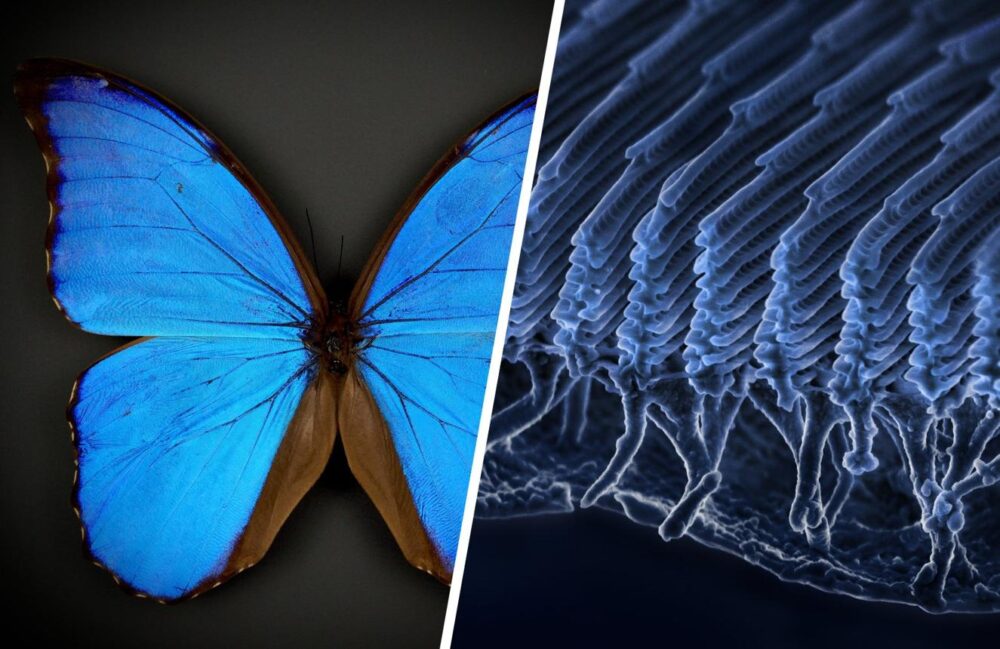
This technology already has fascinating examples in nature. Butterfly wings, peacock feathers, and certain beetle shells display vivid colors because of their microscopic structures. Scientists are studying these natural designs to develop new materials for displays, security labels, sensors, clothing, and sustainable coatings.
In 2026, research into photonic crystals, optical metasurfaces, responsive materials, and advanced manufacturing is expanding the possibilities of structural color engineering. Recent reviews explore how carefully designed structures can create bright colors, improve color stability, and even change appearance in response to external conditions. Research overview

However, this technology also faces challenges. Producing precise nanoscale structures can be expensive, and some structural colors change when viewed from different angles. Understanding these benefits and limitations helps explain why structural color engineering is attracting attention across several scientific and industrial fields.
1. Structural Color Engineering Inspired by Nature
Nature offers some of the best examples of structural color engineering. Many butterflies, beetles, and birds produce brilliant colors without relying entirely on conventional pigments. Their microscopic structures interact with incoming light, selectively reflecting particular wavelengths and producing distinctive visual effects.
The Blue Morpho butterfly is a well-known example. Its wing scales contain intricate structures that generate intense blue coloration. Researchers have investigated ways to reproduce these optical effects using artificial materials and precision fabrication techniques.
Structural Color Engineering and Biomimicry
Biomimicry means learning from nature and applying those principles to human-made technologies. In structural color engineering, scientists examine natural surfaces and recreate their optical properties using engineered structures.
These designs could eventually support durable decorative coatings, optical devices, and specialized sensors. Unlike some conventional pigments, certain structural colors can remain visually stable because their appearance depends on physical architecture rather than only on light-sensitive color molecules.
Nevertheless, copying a natural structure is not always simple. Artificial versions must reproduce the necessary microscopic geometry while maintaining mechanical strength and affordable manufacturing costs.
2. Structural Color Engineering and Photonic Crystals
Photonic crystals are materials with repeating structures that influence how light travels through them. By controlling the size, spacing, and arrangement of these structures, scientists can design surfaces that reflect selected wavelengths and produce particular colors.
Photonic crystals are an important part of structural color engineering because they offer opportunities to control color with considerable precision. Researchers can adjust their geometry to create different shades, patterns, and optical responses.

Structural Color Engineering with Nanoscale Patterns
The spacing between microscopic features can determine which wavelengths are reflected most strongly. Small changes in this spacing may shift the perceived color from one shade to another.
Researchers are investigating photonic structures for decorative surfaces, optical filters, sensing devices, and advanced displays. However, maintaining consistent nanoscale dimensions across large surfaces remains a significant manufacturing challenge.
3. Structural Color Engineering for Eco-Friendly Coatings
Conventional colored coatings often use pigments and dyes that may require chemical processing and eventually fade under sunlight or environmental exposure. Structural color engineering offers another approach by creating color through designed optical structures.
Some structural-color systems can provide vivid coloration and good photostability. Their environmental advantages, however, depend on the materials, manufacturing methods, and complete life cycle of the finished product.
Structural Color Engineering and Sustainable Surfaces
Scientists are exploring coatings that combine structural coloration with other useful properties, including water repellency, self-cleaning behavior, and passive cooling. These multifunctional surfaces could be useful in buildings, vehicles, and consumer products.
Research into structurally colored radiative-cooling materials is particularly interesting because it seeks to combine attractive colors with surfaces that reflect sunlight and release heat as infrared radiation.
The challenge is balancing color intensity with cooling performance. A material that absorbs too much sunlight may become warmer, while a surface optimized for cooling may offer fewer vivid color options. Researchers must carefully design the optical structure to balance both goals.
4. Structural Color Engineering in Smart Displays
Displays usually create images using light-emitting components, filters, or other technologies that control light. Structural color engineering offers another route by using nanoscale structures to selectively reflect or manipulate light.
Some experimental designs can create highly detailed colors and may offer low-power or reflective display possibilities. These properties could eventually benefit electronic labels, specialized screens, and devices that need to remain readable under ambient light.
Structural Color Engineering and Dynamic Colors
An exciting direction is the development of materials that can change color when exposed to electricity, heat, light, or mechanical forces. Researchers are investigating electrically responsive structural-color materials for displays, smart windows, information security, and camouflage.
A 2026 review of electrically responsive structural-color materials discusses different optical structures and the challenges of improving response speed, color range, voltage requirements, and durability. Read the research
Despite this progress, many designs remain experimental. Commercial displays must meet demanding requirements for brightness, viewing angles, response time, manufacturing cost, and long-term reliability.
5. Structural Color Engineering for Security and Anti-Counterfeiting
Counterfeit products and forged documents create serious challenges for manufacturers, consumers, and security organizations. Structural color engineering could help address these problems by creating optical features that are difficult to reproduce without specialized equipment.
Engineered surfaces can produce distinctive colors, patterns, or visual effects that change with viewing angle or illumination. These properties can be incorporated into authentication labels, secure packaging, identification products, and selected financial documents.
Structural Color Engineering and Optical Security
Unlike ordinary printed colors, certain structural patterns require precise microscopic fabrication. This can make them more difficult to imitate using conventional printing techniques.
Future security systems may combine structural colors with machine-readable patterns or optical responses that specialized scanners can verify.
However, structural coloration alone does not guarantee security. Advanced manufacturing methods can become more accessible over time, so effective anti-counterfeiting systems should combine multiple security features and undergo regular testing.
6. Structural Color Engineering in Sensors
Structural color engineering can also support sensors that detect changes in the surrounding environment. Certain engineered structures change their optical response when their spacing, refractive environment, or physical state changes.
These changes can produce visible color shifts that help indicate the presence of a substance or a change in environmental conditions.
Structural Color Engineering for Chemical Detection
Researchers are studying structural-color sensors for applications involving gases, chemicals, humidity, and other measurable conditions. A sensor could potentially indicate a change through a visible color response instead of requiring a complicated electronic display.
For example, a responsive coating might change its appearance when exposed to particular environmental conditions. Such technology could be useful in laboratory research, industrial monitoring, and smart packaging.
However, reliable sensing requires more than a visible color change. Scientists must establish selectivity, sensitivity, repeatability, and resistance to interference from temperature, humidity, and other substances.
7. Structural Color Engineering in Smart Textiles
Clothing and textiles traditionally obtain color through dyes and pigments. Structural color engineering offers a different approach by using microscopic optical structures to generate color on textile surfaces or within specialized fibers.
Researchers are investigating photonic-crystal textiles and other engineered materials that can create vivid appearances without depending exclusively on conventional coloring methods.
Structural Color Engineering for Wearable Technology
Smart textiles could potentially use structural color to indicate changes in temperature, strain, or environmental conditions. A fabric might display a visible response when stretched or exposed to a particular stimulus.
These applications could be useful in sportswear, scientific equipment, and specialized industrial clothing.
Nevertheless, textile applications introduce additional challenges. Fabrics must withstand washing, bending, abrasion, sunlight, and repeated use. Structural patterns must retain their optical properties without making the material uncomfortable, fragile, or prohibitively expensive.
8. Structural Color Engineering and Advanced Manufacturing
Manufacturing is essential to turning structural color engineering from a laboratory concept into a practical technology. Because the optical effect often depends on tiny physical features, fabrication methods must reproduce structures with sufficient precision.
Techniques under investigation include nanolithography, thin-film deposition, self-assembly, nanoimprinting, and two-photon polymerization. Each method offers different advantages in resolution, cost, material compatibility, and production speed.
Structural Color Engineering and 3D Printing
Two-photon polymerization is a high-resolution fabrication method that can produce intricate three-dimensional microstructures. A 2026 review discusses its potential for creating structural colors and optical devices, including applications in information encryption, displays, and microrobotics. Read the review
This manufacturing approach could enable designers to build complex optical patterns that are difficult to produce using conventional techniques.
The major obstacle is scaling up production. A technique that creates a small, detailed sample may be too slow or expensive for manufacturing millions of products. Future progress will depend on faster fabrication, reliable quality control, and cost-effective materials.
Benefits and Hidden Risks of Structural Color Engineering
Structural color engineering offers promising possibilities, but its practical value depends on the application and the way each material is produced.
| Application | Potential benefit | Main challenge |
|---|---|---|
| Nature-inspired coatings | Vivid, potentially durable colors | Complex fabrication |
| Photonic crystals | Precise optical control | Nanoscale manufacturing |
| Smart displays | Dynamic color effects | Brightness and viewing angles |
| Security labels | Difficult-to-copy optical patterns | Advanced counterfeiting |
| Chemical sensors | Visible detection responses | Accuracy and selectivity |
| Smart textiles | Color-changing fabrics | Washing and abrasion |
| 3D optical structures | Complex custom designs | Production speed and cost |
Structural Color Engineering and Environmental Risks
Structural colors may reduce dependence on certain pigments in selected products, but they are not automatically more sustainable. Some systems use metals, synthetic polymers, or energy-intensive manufacturing processes.
Environmental performance must be assessed across the entire product life cycle, including raw materials, production, durability, and disposal. Long-lasting structural-color materials could provide environmental benefits when they replace less durable alternatives, but this advantage must be demonstrated rather than assumed.
Structural Color Engineering and Viewing-Angle Limitations
Some structural colors change appearance when the viewing angle changes. This effect, known as iridescence, is desirable for decorative surfaces and security features but may be problematic when a consistent color is needed.
Researchers are developing non-iridescent designs that maintain a more stable appearance across different viewing angles. These approaches can improve practical usability, although achieving consistent color, high saturation, and affordable production simultaneously remains challenging.
Structural Color Engineering: Research Potential Graph
The following graph is a qualitative illustration of potential application opportunities. It is not a measured market forecast or a scientific performance ranking.
Optical security       ██████████
Advanced sensors       █████████
Smart displays         █████████
Smart textiles         ████████
Eco-friendly coatings  ████████
Mass-market products   ██████
The ratings represent illustrative research potential, not proven commercial success. Actual outcomes will depend on fabrication costs, durability, safety, and the needs of each industry.
Future of Structural Color Engineering
The future of structural color engineering may involve combining optical design with artificial intelligence, advanced materials, and automated manufacturing. Computational tools could help researchers identify structures that produce specific colors while balancing durability, viewing-angle stability, and production requirements.
Bio-inspired materials and cellulose-based photonic structures are also receiving research attention. A 2026 review of cellulose nanocrystals discusses their potential in smart textiles, sustainable packaging, optical devices, and passive cooling materials. Read the review
In the coming years, researchers will need to demonstrate that these technologies can be manufactured consistently and perform reliably outside the laboratory. Standardized color measurements, environmental testing, and realistic cost comparisons will help determine which applications are ready for wider use.
The most successful innovations may not replace every conventional pigment. Instead, structural color engineering could become especially valuable in products where optical precision, durability, visible sensing, or specialized security features provide a clear advantage.
Conclusion
Structural Color Engineering is opening new possibilities for creating vivid colors through the physical design of microscopic and nanoscale structures. Inspired by butterflies and other natural surfaces, researchers are developing technologies for photonic crystals, smart displays, security labels, sensors, textiles, and sustainable coatings.
These advances offer hope for more durable colors, innovative sensing methods, and specialized optical products. At the same time, high manufacturing costs, viewing-angle effects, durability concerns, and environmental trade-offs remain important challenges.
As fabrication methods improve, structural color engineering could become an increasingly useful part of advanced materials science. Its long-term success will depend on combining impressive optical effects with affordability, reliability, and responsible environmental design.