Table of Contents
- Introduction to Microbial Mineralization 2026
- How Microbial Mineralization 2026 Works
- Microbial Mineralization 2026 and Stronger Soil
- Microbial Mineralization 2026 for Self-Healing Concrete
- Microbial Mineralization 2026 and Pollution Removal
- Microbial Mineralization 2026 for Carbon Storage
- Microbial Mineralization 2026 and Coastal Protection
- Microbial Mineralization 2026: Smarter Biological Methods
- Hidden Risks of Microbial Mineralization 2026
- Future of Microbial Mineralization 2026
- Conclusion
Introduction to Microbial Mineralization 2026
is an emerging research area that explores how microorganisms can help create minerals, strengthen soil, repair damaged materials, and address environmental challenges. Scientists are studying how bacteria and other microorganisms interact with dissolved minerals to produce solid structures under suitable environmental conditions. These natural processes could inspire more sustainable solutions for construction, pollution control, and ground improvement.
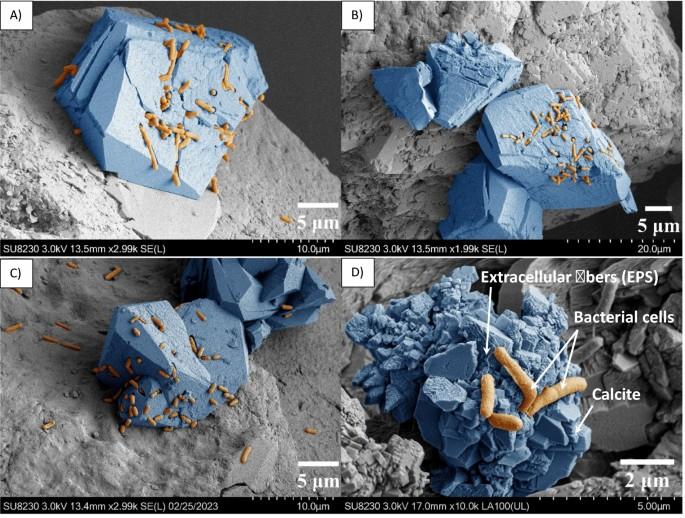
One important example is microbially induced calcium carbonate precipitation (MICP). In this process, microbial activity encourages calcium carbonate, a mineral found in limestone and other natural materials, to form and accumulate. Researchers are exploring how this process can strengthen loose soil, seal small cracks, reduce erosion, and immobilize certain pollutants. A 2026 review in Frontiers in Microbiology examines these applications alongside the challenges that must be addressed before wider deployment. <escape>[1]</escape>
However, Microbial Mineralization 2026 is not a universal solution. Results depend on the microorganisms used, temperature, soil composition, chemical conditions, and treatment methods. Understanding both the benefits and the hidden risks is essential for evaluating its future.
How Microbial Mineralization 2026 Works
Microbial mineralization occurs when microorganisms influence chemical reactions that allow minerals to form. Some microbes change the pH of their surroundings, while others produce enzymes or create surfaces where mineral crystals can develop.

In a common MICP approach, urease-producing bacteria break down urea. This reaction changes the surrounding chemistry, helping dissolved calcium combine with carbonate and form solid calcium carbonate. As mineral crystals accumulate between soil particles, they can create bonds that improve the material’s strength.
Microbial Mineralization 2026 and the Role of Bacteria
Bacteria are important because their metabolic activity can influence where and how minerals form. Certain species are particularly useful in laboratory studies because researchers can grow them under controlled conditions and measure their mineral-producing activity.
Scientists must select suitable microorganisms for each application. A bacterium that performs well in a laboratory may behave differently in cold temperatures, salty water, acidic soil, or a complex construction site.
Microbial Mineralization 2026 and Mineral Crystal Formation
Mineral formation depends on more than the presence of bacteria. Calcium availability, pH, moisture, nutrient supply, and the movement of liquids through a material can all affect the final result. Researchers are investigating these factors to produce more uniform mineral deposits and improve the reliability of the process.
Microbial Mineralization 2026 and Stronger Soil
One of the most promising applications of Microbial Mineralization 2026 is soil stabilization. Loose sand and weak ground can create problems for roads, buildings, embankments, and other infrastructure. Conventional ground improvement may involve cement-based materials, excavation, or chemical treatments.
MICP offers another approach. A suitable bacterial culture and mineral-forming solution can be introduced into granular soil. As calcium carbonate develops around and between particles, it can create bonds that help the soil resist movement.
Microbial Mineralization 2026 for Earthquake-Related Risks
Researchers are investigating whether microbial soil treatment can reduce liquefaction-related hazards. During strong earthquakes, saturated loose sandy soil can lose strength as pore-water pressure rises. Mineral bonds may improve the resistance of treated ground to deformation.
Nevertheless, microbial treatment cannot guarantee earthquake safety. Its effectiveness depends on treatment depth, soil conditions, uniformity, and the intensity of ground shaking. Engineers need site-specific testing before relying on this technology.
Microbial Mineralization 2026 for Self-Healing Concrete
Concrete is widely used because it is strong and durable, but cracks can allow water and harmful substances to enter. Over time, this can contribute to corrosion, deterioration, and costly repairs.
Microbial mineralization offers a possible way to seal some cracks. Certain bacteria or biologically active components can help generate mineral deposits when moisture and suitable nutrients become available. These deposits may fill small openings and reduce water movement through the material.
Microbial Mineralization 2026 and Longer-Lasting Buildings
Self-healing concrete could help reduce maintenance needs in selected structures. Researchers are studying bacterial survival, mineral production, crack width, and long-term performance under changing environmental conditions.

The approach is especially interesting for infrastructure where repairs are difficult or expensive. However, not every crack can be repaired biologically, and mineral filling does not automatically restore the original structural strength. Safety-critical damage still requires professional inspection and appropriate engineering repairs.
Microbial Mineralization 2026 and Pollution Removal
Environmental cleanup is another important area of Microbial Mineralization 2026 research. Some contaminated soils and wastewater contain dissolved metals that can spread through water or enter living organisms.
Under suitable chemical conditions, microbial mineralization may help immobilize certain metals by incorporating them into mineral structures or encouraging them to precipitate. This can reduce their mobility, making them less likely to migrate through the environment.
Microbial Mineralization 2026 for Cleaner Water
Scientists are exploring mineral-forming microbial processes for wastewater treatment and contaminated groundwater management. Depending on the chemistry, these methods may help remove selected pollutants while producing solid material that can be separated from water.
However, immobilization is not the same as destroying a contaminant. Pollutants may become mobile again if pH or other environmental conditions change. Any treatment system must therefore be evaluated for long-term stability, waste handling, and possible secondary pollution.
Microbial Mineralization 2026 for Carbon Storage
Carbon storage is attracting interest because some mineralization processes can convert dissolved carbon into stable carbonate minerals. When suitable calcium or magnesium sources are available, these reactions may provide a pathway for storing carbon in solid form.
Microorganisms can support certain steps in these reactions, depending on the process being used. Researchers are investigating how biological activity might improve reaction rates or help mineral formation occur under less energy-intensive conditions.
Microbial Mineralization 2026 and Climate Benefits
Mineral-based carbon storage has potential advantages because suitable carbonate minerals can remain stable for long periods. Yet the climate benefit depends on the entire process, including the source of the minerals, energy use, transportation, and any emissions generated during treatment.
Microbial mineralization should not automatically be described as carbon-negative. Researchers need life-cycle assessments and reliable measurements to determine whether a specific system stores more carbon than it emits.
Microbial Mineralization 2026 and Coastal Protection
Coastal erosion threatens shorelines, habitats, and infrastructure. Waves and currents can gradually remove sand and weaken exposed ground. Microbial mineralization is being investigated as a way to bind particles together and increase resistance to erosion.
In suitable sandy environments, calcium carbonate deposits may help hold grains together. This could support certain erosion-control applications or complement existing coastal engineering methods.
Microbial Mineralization 2026 for Sustainable Shorelines
A potential benefit is that biological mineral formation may allow engineers to strengthen selected areas without relying entirely on conventional construction materials. It could be useful for carefully designed pilot projects where environmental impacts can be monitored.
However, coastal systems are complex. Tides, changing salinity, marine organisms, and water movement can influence treatment performance. Introducing microorganisms or chemical solutions into sensitive habitats also requires environmental assessment and appropriate oversight.
Microbial Mineralization 2026: Smarter Biological Methods
Researchers are exploring ways to make microbial mineralization more predictable and efficient. One major challenge is ensuring that minerals form in the right places rather than accumulating near injection points or blocking pathways needed for treatment.
Improved delivery systems, carefully selected microbial strains, and better monitoring may help address these problems. Scientists are also investigating alternative biological pathways that could reduce unwanted chemical by-products.
Microbial Mineralization 2026 and Artificial Intelligence
Artificial intelligence could help researchers analyze experimental data and identify relationships between temperature, pH, bacterial activity, and mineral formation. Models may help predict which treatment conditions are likely to produce better results.
However, computer predictions cannot replace physical experiments. Soil properties vary widely, and models trained on laboratory data may not accurately predict field performance. Combining data analysis with real-world testing is essential.
Microbial Mineralization 2026: Benefits and Hidden Risks
Microbial mineralization offers exciting possibilities, but its environmental performance depends on the exact process and how it is managed. A technology can be biologically based without being automatically harmless or cost-effective.
| Application | Potential benefit | Main challenge |
|---|---|---|
| Soil stabilization | Stronger bonds between particles | Uneven treatment |
| Self-healing concrete | Sealing selected cracks | Bacterial survival and durability |
| Pollution control | Reduced mobility of certain metals | Long-term mineral stability |
| Carbon storage | Formation of stable carbonate minerals | Full life-cycle emissions |
| Coastal protection | Improved resistance to erosion | Effects on marine environments |
| AI-assisted optimization | Better process prediction | Limited real-world data |
Microbial Mineralization 2026 and Chemical By-Products
Some widely studied MICP methods rely on urea breakdown and can generate ammonium-related by-products. If these substances are not properly managed, they may create environmental concerns. Alternative pathways are being studied to reduce these unwanted effects.
Another challenge is cost. Producing microbial cultures, transporting treatment solutions, monitoring mineral growth, and maintaining consistent performance can make large projects expensive. Conventional construction methods may remain more practical in some settings.
Future of Microbial Mineralization 2026
The future of Microbial Mineralization 2026 will depend on whether researchers can move from promising experiments to dependable field applications. Progress requires better understanding of microbial behavior, mineral formation, treatment uniformity, and long-term durability.
Future research may combine biological treatments with conventional engineering, advanced sensors, and predictive models. This could help engineers decide where microbial methods are suitable and where other solutions are more effective.
Scientists also need common testing standards so that results from different laboratories and field trials can be compared fairly. Long-term monitoring will be important for checking whether treated soils remain stable, concrete repairs last, and immobilized pollutants stay contained.
Conclusion: Microbial Mineralization 2026 Brings Hope and Risks
Microbial Mineralization 2026 highlights how microorganisms can help form minerals that may serve practical engineering and environmental purposes. From strengthening soil and sealing selected concrete cracks to treating certain pollutants and supporting mineral-based carbon storage, the technology offers several promising research directions.
At the same time, uneven mineral formation, chemical by-products, cost, environmental effects, and limited long-term evidence remain important challenges. The strongest results will come from matching the right biological process to the right application and testing it under realistic conditions.
Microbial mineralization is not a magic replacement for every conventional material. Instead, it is a developing technology that could become a valuable part of more sustainable construction and environmental management as scientific evidence and engineering methods improve.